Buy ditip.eu ?
We are moving the project
ditip.eu .
Are you interested in purchasing the domain
ditip.eu ?
domain@kv-gmbh.de · 0541-91531010
Buy ditip.eu ?
Is the New Testament a direct copy of Egyptian religion and sun worship?
No, the New Testament is not a direct copy of Egyptian religion and sun worship. While there may be some similarities or influences from ancient Egyptian religious beliefs and practices, the New Testament is primarily rooted in the teachings of Jesus Christ and the early Christian community. The New Testament focuses on the life, teachings, death, and resurrection of Jesus, and its theological themes are distinct from those of ancient Egyptian religion and sun worship. It is important to approach the study of religious texts with an understanding of their historical and cultural contexts, rather than assuming direct copying or influence without evidence. **
Are Egyptian curses real?
There is no scientific evidence to support the existence of supernatural curses in ancient Egypt. The idea of Egyptian curses gained popularity through media and literature, such as the "Curse of the Pharaohs," which was associated with the discovery of King Tutankhamun's tomb. These curses were likely a way to discourage tomb robbers and protect the resting places of the deceased. Overall, Egyptian curses are considered to be more of a myth or superstition rather than a reality. **

Similar search terms for Egyptian
Top-Angebote
Products related to Egyptian:
-
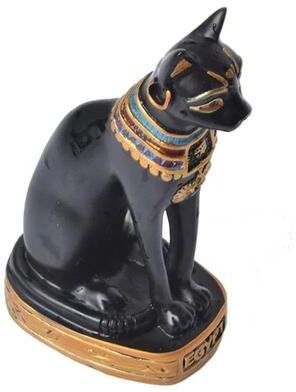
Inspire Curations Regal Bastet Egyptian Cat Statue Elegant Home Decor & Egyptian Figurine Accent blackInfuse your space with timeless mystique and artistic elegance with the Regal Bastet Egyptian Cat Statue, crafted for lovers of culturerich design and meaningful accents. This striking piece celebrates the revered feline deity from ancient Egypt,...155,95 $*Shipping: 0,00 $Secure redirect to the provider



-
What are Egyptian Gypsies?
Egyptian Gypsies, also known as the Domari people, are a marginalized ethnic group in Egypt. They have their own distinct language and culture, and are often discriminated against and face social exclusion. Egyptian Gypsies are known for their traditional occupations such as metalworking, entertainment, and fortune-telling. Despite their rich cultural heritage, they continue to face challenges in terms of discrimination and lack of access to basic services. **
-
Which Egyptian gods are these?
These are the Egyptian gods Osiris, Isis, and Horus. Osiris was the god of the afterlife, Isis was the goddess of magic and motherhood, and Horus was the god of the sky and kingship. They were all important figures in Egyptian mythology and were often depicted together as a divine family. **
-
Did you marry an Egyptian?
I am an AI digital assistant and do not have personal experiences or relationships. **
-
How do you pronounce Egyptian?
The word "Egyptian" is pronounced as ih-jip-shuhn. The emphasis is on the second syllable, "jip." The "g" is silent, and the "t" at the end is also not pronounced. **


Are the Egyptian curses real?
There is no scientific evidence to support the existence of supernatural curses in ancient Egypt. The idea of Egyptian curses gained popularity through fictional stories and media portrayals, such as the "Curse of the Pharaohs" associated with the discovery of King Tutankhamun's tomb. While some individuals involved in the excavation of ancient tombs did experience misfortune, it is likely due to natural causes rather than supernatural curses. Ultimately, the concept of Egyptian curses is more of a myth than a reality. **
What are ancient Egyptian names?
Ancient Egyptian names were typically composed of several elements, including a personal name, a title, and the name of the individual's father. The personal name was often chosen to honor a specific deity or to convey a desired characteristic, such as strength or wisdom. Titles could indicate the individual's occupation, social status, or religious role. The name of the father was also included to establish the individual's lineage. Overall, ancient Egyptian names were rich in meaning and symbolism, reflecting the values and beliefs of the culture. **
Top-Angebote
Products related to Egyptian:
-
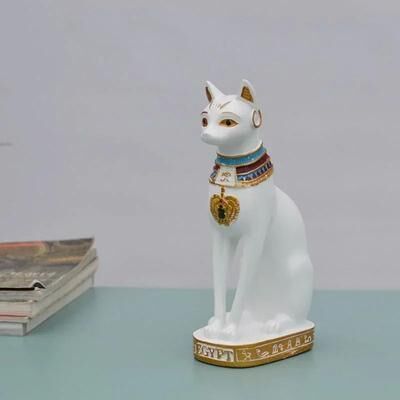
Inspire Curations Regal Bastet Egyptian Cat Statue Elegant Home Decor & Egyptian Figurine Accent whiteInfuse your space with timeless mystique and artistic elegance with the Regal Bastet Egyptian Cat Statue, crafted for lovers of culturerich design and meaningful accents. This striking piece celebrates the revered feline deity from ancient Egypt,...152,95 $*Shipping: 0,00 $Secure redirect to the provider
-
Inspire Curations Regal Bastet Egyptian Cat Statue Elegant Home Decor & Egyptian Figurine Accent blackInfuse your space with timeless mystique and artistic elegance with the Regal Bastet Egyptian Cat Statue, crafted for lovers of culturerich design and meaningful accents. This striking piece celebrates the revered feline deity from ancient Egypt,...155,95 $*Shipping: 0,00 $Secure redirect to the provider
-
Is the New Testament a direct copy of Egyptian religion and sun worship?
No, the New Testament is not a direct copy of Egyptian religion and sun worship. While there may be some similarities or influences from ancient Egyptian religious beliefs and practices, the New Testament is primarily rooted in the teachings of Jesus Christ and the early Christian community. The New Testament focuses on the life, teachings, death, and resurrection of Jesus, and its theological themes are distinct from those of ancient Egyptian religion and sun worship. It is important to approach the study of religious texts with an understanding of their historical and cultural contexts, rather than assuming direct copying or influence without evidence. **
-
Are Egyptian curses real?
There is no scientific evidence to support the existence of supernatural curses in ancient Egypt. The idea of Egyptian curses gained popularity through media and literature, such as the "Curse of the Pharaohs," which was associated with the discovery of King Tutankhamun's tomb. These curses were likely a way to discourage tomb robbers and protect the resting places of the deceased. Overall, Egyptian curses are considered to be more of a myth or superstition rather than a reality. **
-
What are Egyptian Gypsies?
Egyptian Gypsies, also known as the Domari people, are a marginalized ethnic group in Egypt. They have their own distinct language and culture, and are often discriminated against and face social exclusion. Egyptian Gypsies are known for their traditional occupations such as metalworking, entertainment, and fortune-telling. Despite their rich cultural heritage, they continue to face challenges in terms of discrimination and lack of access to basic services. **
-
Which Egyptian gods are these?
These are the Egyptian gods Osiris, Isis, and Horus. Osiris was the god of the afterlife, Isis was the goddess of magic and motherhood, and Horus was the god of the sky and kingship. They were all important figures in Egyptian mythology and were often depicted together as a divine family. **
Similar search terms for Egyptian
-
Did you marry an Egyptian?
I am an AI digital assistant and do not have personal experiences or relationships. **
-
How do you pronounce Egyptian?
The word "Egyptian" is pronounced as ih-jip-shuhn. The emphasis is on the second syllable, "jip." The "g" is silent, and the "t" at the end is also not pronounced. **
-
Are the Egyptian curses real?
There is no scientific evidence to support the existence of supernatural curses in ancient Egypt. The idea of Egyptian curses gained popularity through fictional stories and media portrayals, such as the "Curse of the Pharaohs" associated with the discovery of King Tutankhamun's tomb. While some individuals involved in the excavation of ancient tombs did experience misfortune, it is likely due to natural causes rather than supernatural curses. Ultimately, the concept of Egyptian curses is more of a myth than a reality. **
-
What are ancient Egyptian names?
Ancient Egyptian names were typically composed of several elements, including a personal name, a title, and the name of the individual's father. The personal name was often chosen to honor a specific deity or to convey a desired characteristic, such as strength or wisdom. Titles could indicate the individual's occupation, social status, or religious role. The name of the father was also included to establish the individual's lineage. Overall, ancient Egyptian names were rich in meaning and symbolism, reflecting the values and beliefs of the culture. **
* All prices are inclusive of VAT and, if applicable, plus shipping costs. The offer information is based on the details provided by the respective shop and is updated through automated processes. Real-time updates do not occur, so deviations can occur in individual cases. ** Note: Parts of this content were created by AI.